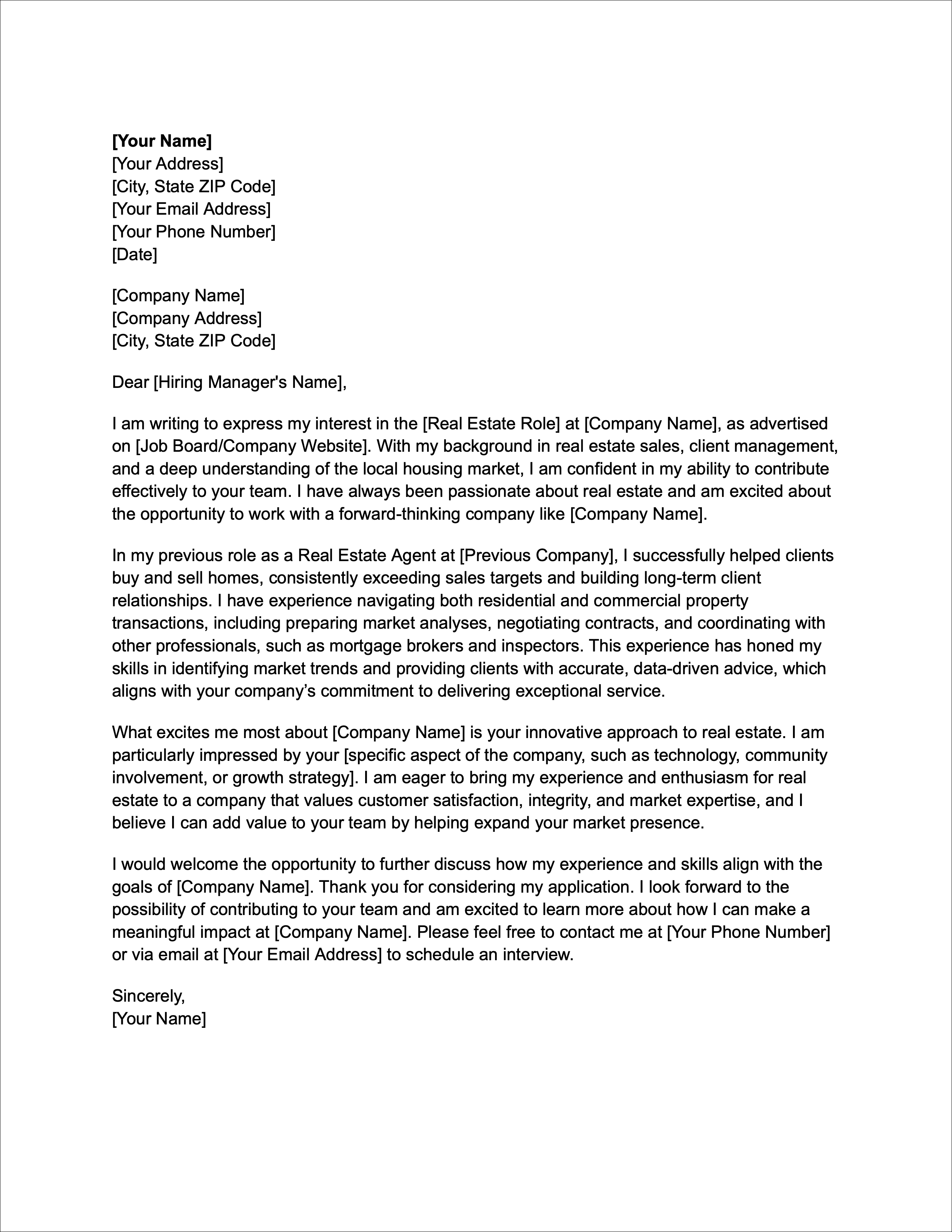
Cover letters introduce your story and create a first impression for employers. They link your resume to the position, showcasing your knowledge of the organization and highlighting relevant skills. Start by researching the organization, considering what intrigues you and what you have to offer.
- WHAT TO INCLUDE
- AI & COVER LETTERS
- ONLINE COVER LETTER BUILDER
- QUICK TIPS
- QUICK FORMATTING TIPS
- SAMPLES
WHAT TO INCLUDE
Your cover letter should include 3-4 paragraphs with the following information:
-
First Paragraph
The main purpose of the first paragraph is to introduce yourself and tell why you are writing. You want to grab the employer’s attention: why you are interested in this position and/or why this organization. Use your community: if someone has referred you to the organization (a current employee, friend, family member) include his or her name in the first sentence.
-
Second/Third Paragraph
This is where you connect your experiences and skills to the job description. Why are you qualified for this position? describe your qualifications for the type of position you seek using specific examples from academic, work, volunteer, and/or co-curricular experiences. Include specific numbers, results, and accomplishments. You will want to connect these back to the job description, organization and/or field. You may consider using words or language in the job description to help tie your experiences in. Avoid repeating facts outlined on your resume by focusing on key concepts.
-
Final Paragraph
Summarize or give a final statement of interest/qualifications. Thank the employer for his/her time and consideration. Consider tying in the company’s tagline, mission, or values.
Need help getting started?
Answer some of these questions to help you consider what you want to say in each paragraph:
- Paragraph 1: Why are you interested in this position/this organization? What in the posting made you say “I’ve got to apply!”? Has anyone referred you to the position?
- Paragraphs 2-3: What 2-3 experiences connect your skills to those listed in the position? What made you say “I can do that!”? What skills do you have that are listed in the job description? What makes you qualified to do this job?
- Paragraph 4: What final point do you want to make?
CONSIDERATIONS FOR INCORPORATING AI INTO COVER LETTERS
Using AI for cover letters offers benefits like saving time, providing writing guidance, tailoring content to specific jobs, and ensuring grammar and style correctness. AI boosts consistency, boosts confidence, and reduces writer's block, giving you a competitive edge in the job market. Remember, while AI helps, personalization and creativity remain important for a successful cover letter.
Check out these resources:
ONLINE COVER LETTER BUILDER
Looking for a little help to get you started typing up your cover letter? Consider using Lettersmith: an online tool developed by U-M's Center for Academic Innovation to help you get started with a checklist of what to include and example letters.
QUICK TIPS
- Keep it short and sweet, do not exceed one page.
- Be persuasive and show enthusiasm.
- Emphasize both your hard and soft skills
- Use LinkedIn and the organization’s website to gather information for your cover letter. Focus on skills and attributes the employer is seeking in applicants. Discuss these skills in the body of your cover letter.
- Try to find the name of the person you want to read the letter. It demonstrates a higher level of investment and enthusiasm for the position. If you can't find a name use a title (eg: Internship Coordinator, Human Resources Director, Hiring Manager). Avoid To Whom it May Concern.
- Cover letters also showcase your writing abilities. Therefore, it is imperative that your cover letters be error-free and grammatically sound. Avoid beginning every sentence with an “I” statement.
-
Avoid cover letter clichés (e.g. ...make me an outstanding candidate).
For more cover letter tips, check out these websites:
QUICK FORMATTING TIPS
- Font: 10 to 12 point, using the same font as your resume.
- Margins: .5 to 1 inches.
- Layout: Left justified, beginning no more than 2 inches from the top.
- Style: Positive language, confident but not imposing, concise with supporting detail, written in active verb voice.
- E-mail: If applying via email, use the body of the email as your cover letter, starting with a professional salutation.
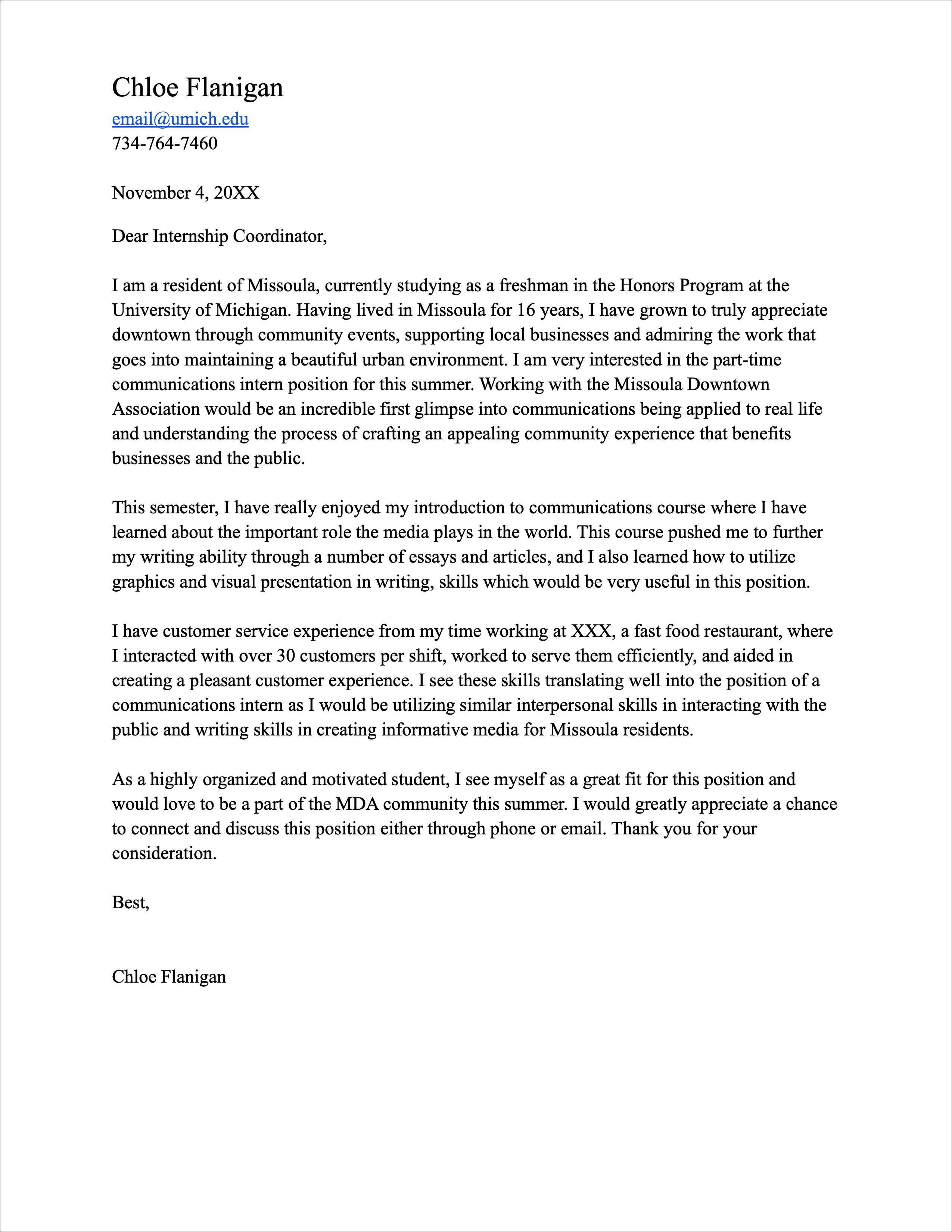
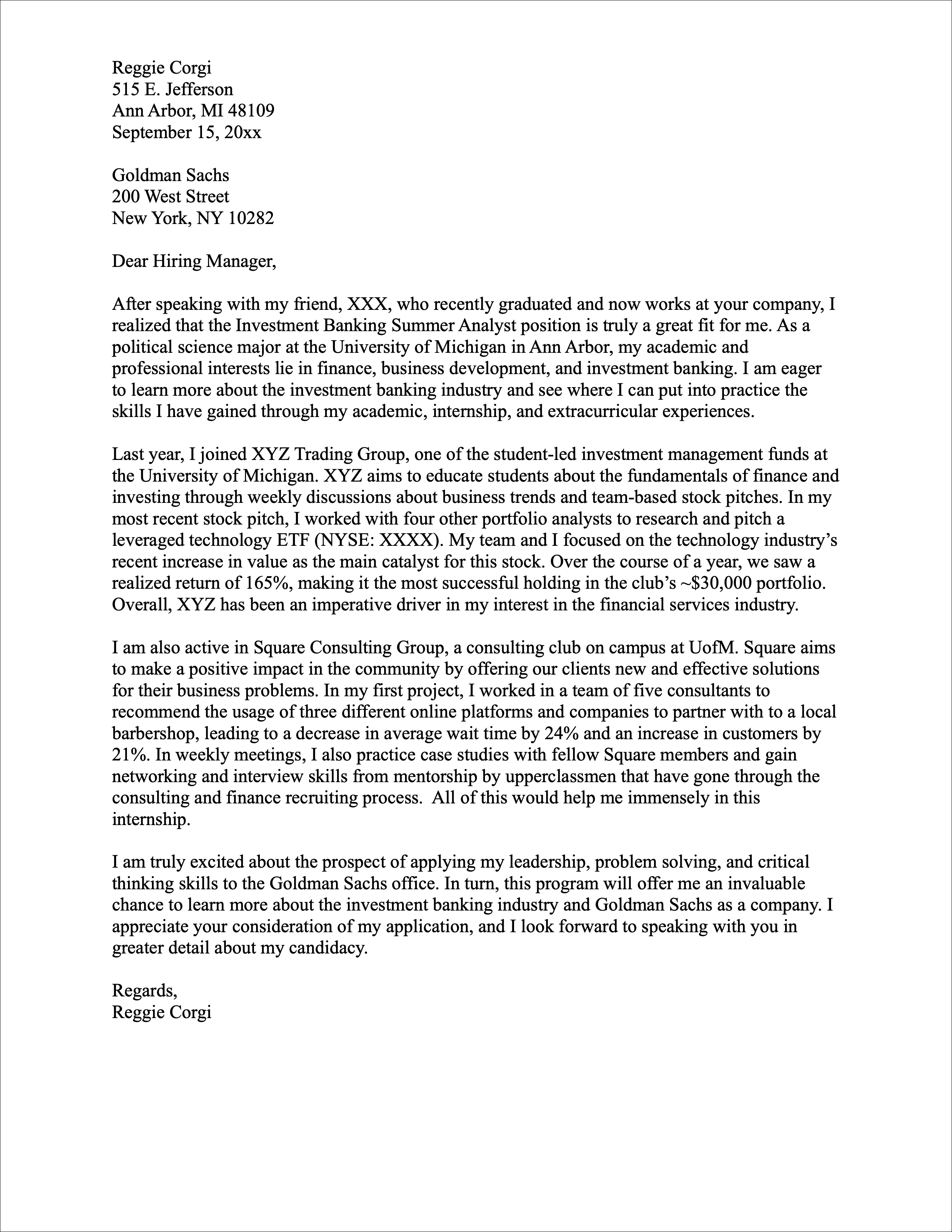
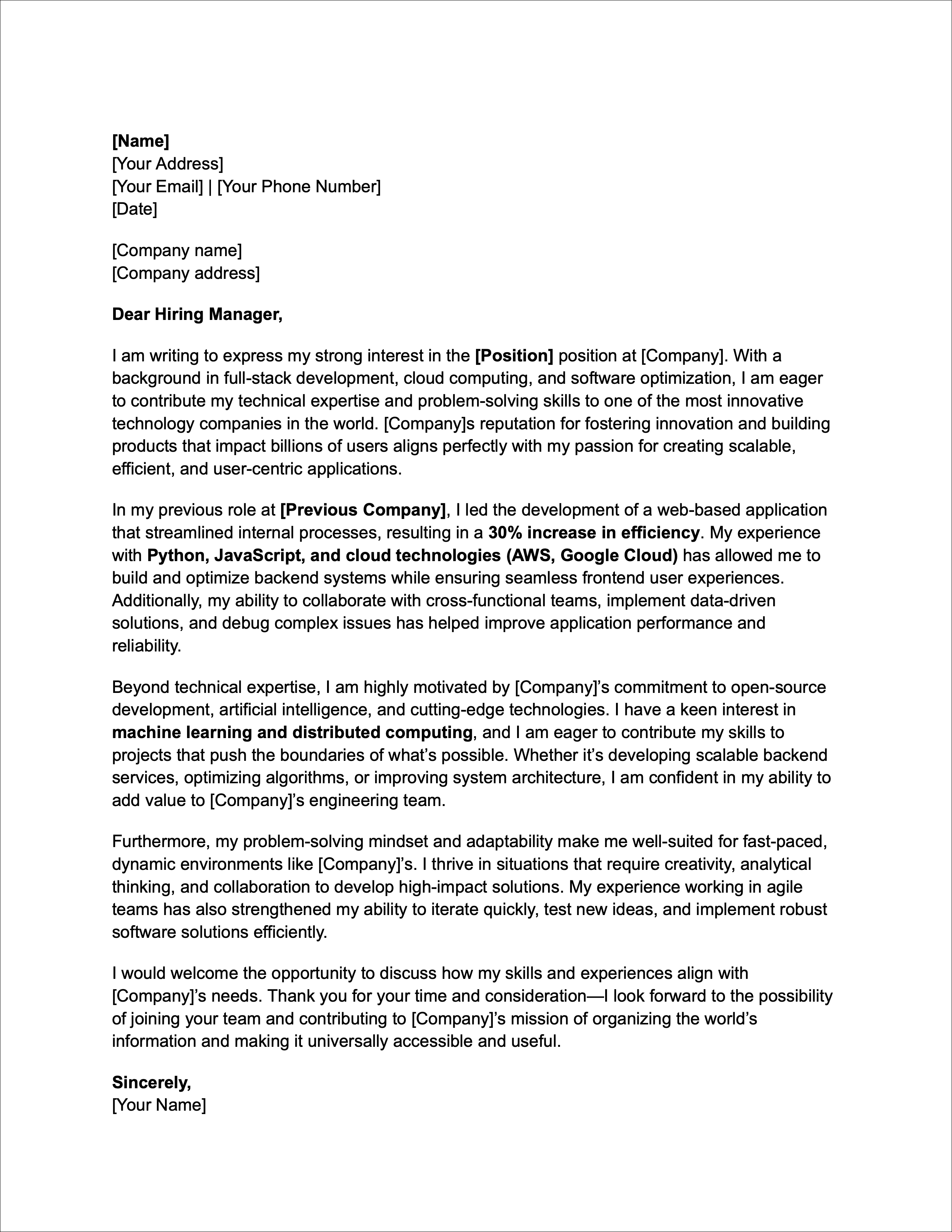
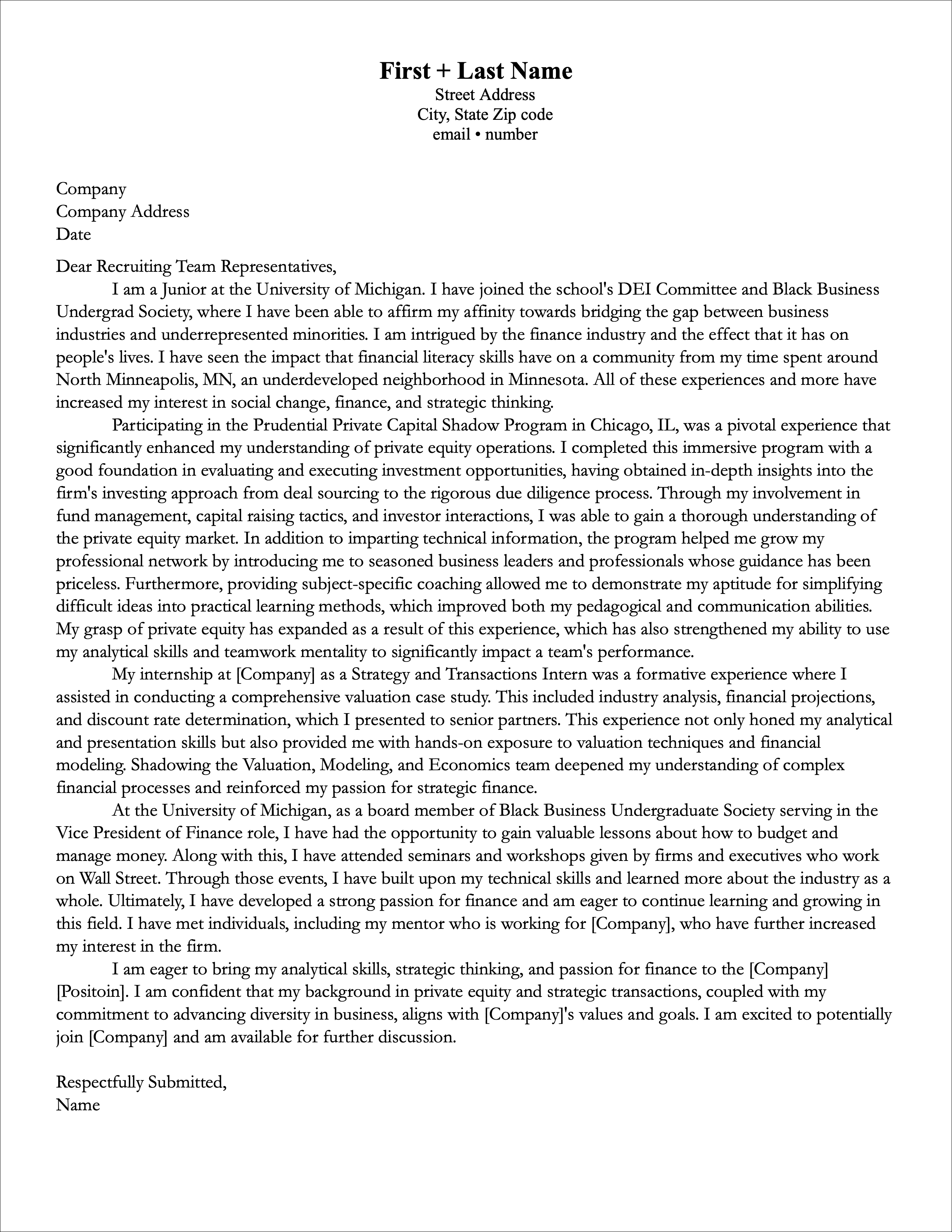
SAMPLES
Choose a thumbnail below to access the full example view: